
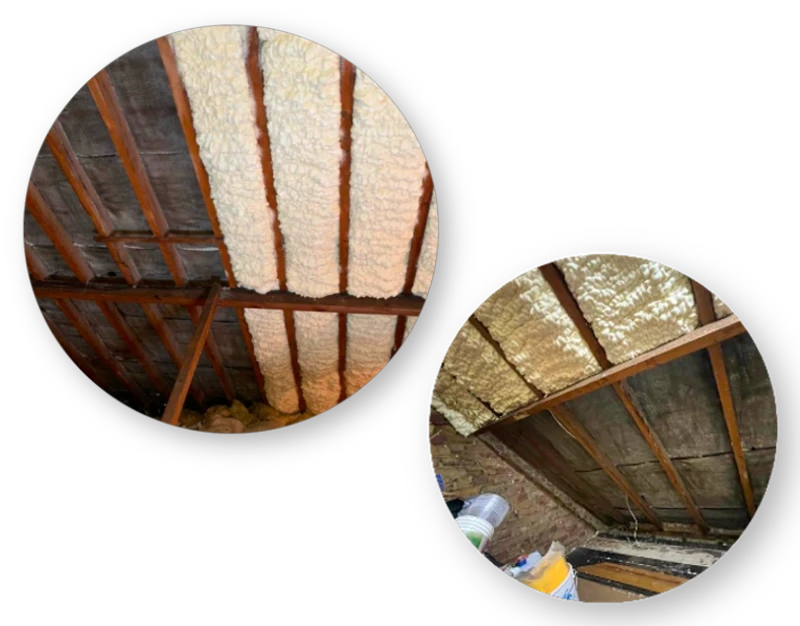
Spray foam insulation is a popular choice for insulating buildings due to its high energy efficiency and ability to seal gaps and cracks. However, its impact on the environment is a topic of increasing concern, both in terms of its installation and removal. It’s important for consumers and builders to be aware of the potential environmental risks and to consider more sustainable options or practices when using this type of insulation. Within this post, we explore the environmental aspects of spray foam insulation, its effects when installed and when removed, and discuss strategies to minimise these negative impacts.
What is Spray Foam Insulation?
Spray foam insulation is a chemical product created by combining two materials, isocyanate and polyol resin, which react to form a foam that expands and hardens upon application. This type of insulation is favoured for its superior air sealing properties, which can significantly reduce energy consumption for heating and cooling. However, the very chemicals that make it effective also raise environmental and health concerns.
The Environmental Impact When Installed
One of the key environmental benefits of spray foam insulation is its ability to improve a building’s energy efficiency. By creating an airtight seal, spray foam insulation reduces the amount of energy needed to heat or cool a building, decreasing the carbon footprint associated with energy production. The blowing agents used in certain types of spray foam can emit hydrofluorocarbons, potent greenhouse gases that contribute to global warming.
Although newer formulas aim to reduce or eliminate hydrofluorocarbons, the impact of older installations still lingers. During application, the chemicals in spray foam can release volatile organic compounds and other airborne pollutants that can compromise indoor air quality and pose health risks to installers and occupants.
The Environmental Impact When Removed
Removing spray foam insulation can be just as problematic as installing it, if not more so, due to the difficulty of extraction and the potential release of harmful substances. Below, we touch on these points in more detail;
Chemical Exposure – During removal, dust and particles that may contain isocyanates and other toxic substances can become airborne, posing health risks to workers and building occupants.
Waste Disposal – Once removed, spray foam insulation generally becomes landfill waste. Unlike some other forms of insulation, spray foam is not biodegradable and is difficult to recycle, contributing to landfill burden.
Energy Consumption – The process of removing insulation requires energy, particularly if extensive measures are needed to safely extract and contain the material. This adds to the overall environmental footprint of the removal process.
Minimising Negative Environmental Effects
To reduce the environmental impacts associated with both the installation and removal of spray foam insulation, we suggest you consider the following strategies;
- Opt for spray foam products that use water or other environmentally friendly blowing agents instead of hydrofluorocarbons. Check for certifications like Greenguard, which indicate lower emissions of volatile organic compounds.
- Ensure that spray foam is applied correctly and safely to minimise the need for future removal or corrections. Proper installation maximises the lifespan of the insulation and its environmental benefits.
- When removal is necessary, be sure to use techniques that minimise airborne dust and particles. Employing vacuum extraction methods and proper personal protective equipment can help reduce the exposure to harmful chemicals.
- Investigate options for recycling or repurposing removed insulation material. Some innovative approaches are being developed, although recycling options are currently limited.
- Follow local regulations and guidelines for safe handling, installation, and disposal of insulation materials. Staying informed about the latest industry practices can also help reduce environmental impacts.
Be Aware of Your Insulation’s Impact on the Environment
While spray foam insulation offers significant energy efficiency benefits, its environmental impact during installation and removal requires careful consideration. By choosing more environmentally friendly products, ensuring proper installation, and adopting safe removal and disposal practices, we can reduce the negative effects on our environment. Exploring options like recycled or bio-based foam alternatives can further reduce the ecological footprint of your insulation project.
Ultimately, if you have any doubts or questions regarding spray foam insulation, its presence in your property and how to go about maintaining and even removing it, then rest assured that our experts at TaylorMade Spray Foam Removal are on hand to provide you with everything you need to know about your spray foam insulation. Simply visit our website or get in contact with us by phone on 0800 2922116, by email [email protected] or via our online contact form and we’ll get back to you in no time.